Thursday, January 29, 2015

Use these email marketing tips to explode your business.
Email marketing is your foundation when it comes to marketing and promoting your business.
There are quite a few ways to use email marketing in your marketing campaigns.
If you're in the network/internet marketing industry than you know that running a business without email marketing may not be a wise choice.
When your business grows, you will need ways to contact all of your leads to give reminders, updates, new deals and so on at the click of a button.
The trick to getting people to opt in so that you can have their email, is to offer something of value, something that can be a solution to their problem.
When we offer value to the marketplace we are indeed branding ourselves and building our lead list. They always say time after time that the real money is in the list. So true...
The idea is to build a list of high quality leads, most of the people who opt in will be leaders because leaders always provide room for growth.
A great tip to use today is adding pictures and videos to your email campaigns. When you add graphics and videos people will most likely keep the email open until done.
I usually add videos to my email campaigns for training reasons, most people can learn better by seeing what's being taught.
Is the subject line the most important thing in a email marketing campaign? Yes
The first thing your audience will see is your subject line, you want to get creative here and make a mark.
Some good subject lines you can use would be: "Open Up (Please Read)" or "Why did you do that?", maybe something like "Commission Pending"
Take your time in coming up with a good catchy subject line because this is what gets your audience to open up your email in the first place.
If email marketing is done right it can bring some tremendous results instantly. Use a good template and make sure that the first part of the email is informative to your audience. Very important tip, please don't overdo your emails, it should be every other day or every 2 days.
What is considered spamming?
When you send only emails that are trying to sell something without offering any real value, your email may not get opened and if it do, it may be unsubscribed.
No one like to receive tons of emails all day long, use email marketing in moderation to maximize your results. Be consistent when sending your emails, after a email series is up, add another 7-28 day series with helpful information that can benefit them.
I would personally recommend that you use email marketing to the fullest, this will also make you look more professional. There are many articles on the internet with helpful information regarding email marketing.
If you found any value in this post and would like to use a good email marketing system CLICK HERE TO GET FREE EMAIL SYSTEM
The easiest ways to make money online can be through internet marketing companies.
Internet marketing companies basically sell products using the direct selling method by independent representatives who promote the products themselves.
Direct selling companies save tons of money on advertising when they use the direct selling method through independent representatives.
One of the reasons internet marketing companies are so easy to make money online is some are free to start up. There are so many free to join opportunities that pay pretty well, may be most likely supplemental income though.
Free to join opportunities may require a lot of work or a lot of team members just to make $200 a week, so if you want to walk off your job one day it would be wise to join opportunities that cost.
Depending on what you like to do or want to do, internet marketing can be your savior when it comes to making extra income.
If you don't mind processing emails, that could be a good way to make some quick bucks online. Email processing is can pay some pretty good income, but can be time consuming and requires hours of posting.
Selling items on eBay and Amazon is considered one of the easiest ways to make money online. This involves having your own items to sell in stock or you can copy and paste items. The idea is to find a wholesaler and mark up the items for a few bucks and sell them online.
There is this site used to do surveys and they pay your per survey, you don't get paid much for the surveys so you would need to do more than 25 per day to make any real money weekly. Getting paid to take surveys been around for quite some time and are considered goos ways to make money online.
If you're a freelance writer or marketer, you will be able to find numerous money making opportunities online. I recommend a site called FIVERR, this is a site where you can showcase your work and sell it for just $5. You can really make a good income here if your work is liked by all of your customers.
There is this one company with a lot of buzz online by the name of Four Corners Alliance Group, a financial wellness company offering financial literacy. This is a $18 dollar one-time investment with no monthly fees so its very easy to earn a good amount of income.
In conclusive the easiest ways to make money online can be thousands of different things, it depends on what you are comfortable with.
This article will show you how to get free leads without paying for them.
These leads are generated through traditional forms of marketing like attraction marketing, blogging and videos.
The most used method of getting free leads is offering value to the marketplace. People are always willing to put in there information on your capture page to receive your offer. This generates tons of free leads for your business.
When you buy leads from lead companies most of the time they're old leads or leads that aren't in your targeted niche. Generating your own leads for free is the best way to go.
The goal is to get laser targeted leads so that you have higher chances of making a sale, if the leads aren't targeted you will lower your chances of getting the sale.
There are a lot of other good ways to get free leads for your business and we will go over some.
Newsletter marketing can generate a good amount of free targeted leads. The newsletter goes out on a daily basis giving away free info on something related to the business you're in.
Another technique used to generate free leads is a high ranked blog, this generates tons of leads on a daily basis 24/7. A Search Engine Optimized blog can generate targeted leads for free and forever.
If you want to generate free leads at this very moment, you should come up with the perfect bribe for you audience. A bribe can be a free ebook, training or free tools to help the end user.
In conclusion, there are a few ways to generate fresh laser targeted leads for your business....at no cost.
Friday, January 23, 2015
Why Network Marketing? - Is It For You?
Network marketing is one of the easiest industries to be involved with in my opinion.
All we do in network marketing is market to a large network of people (entrepreneurs). Not all of our marketing is done for network marketers, we also focus on building a customer base.
I became part of the network marketing industry because I wanted more out of life and wanted to depend on myself for getting paid.
How can you tell if network marketing is for you or not? 
Well if you don't like to meeting new people, traveling the world, spending about 4-8 hours a day building, writing blogs, making videos, posting statuses on facebook, than this is definitely not for you.
Network marketing was created to help companies promote and sell their products without using the traditional advertising and promotions. We call our business opportunities direct selling companies.
Most of the people in network marketing field are working full and part time jobs until they actually double their income, then they usually take this full time. This industry helped so many people in millions walk off their slave jobs.
What are some of the benefits of network marketing?
you can work on your own set schedule
you can create an unlimited amount of wealth
you can meet a lot of nice people all over the world
you can vacation more
you can do whatever you want to do
you can use the leverage of others to further your cause
you don't have to spend thousands to get started
you can get better tax advantages
some require no inventory
no renting out spaces like traditional business
retire young and way before 65
The benefit of waking up when you want to can be a great feeling. Network marketing will give you more time freedom than a job could ever give you unless you're a CEO.
What should I look for when trying to get into the network marketing industry?
The first thing you should look for is a stable company, some companies are publicly traded so the financials are their for your review. Do your due diligence on every company you like.
You want to create a master plan of what you want to achieve. Set realistic goals that can be reached through hard work and dedication.
Things to look at when choosing the right company...
The start up cost
the monthly auto ship (monthly fee) if any
Who is the CEO
How long they been operating the business
Is there excellent customer support
Is full training and support provided
Does the company have a complete system that can be duplicated
Can you personally benefit from the products or do you know people who can benefit from the products
Are commissions paid out on time
does the company has a clear vision of where they want to go
Do you have to buy products every month to qualify for commissions
There are a few more things to consider when you're searching for the best company. You want to find a company that is compatible with your goals and aspirations.
Sometimes reading reviews written by other network marketers can help or break your decision. Some use reverse marketing tactics where they review the company then tell you about all of the cons rather both. Be aware and do not believe everything you read especially if its negative.
If you want to check out an awesome business opportunity that does't require a huge start or monthly fee then CLICK HERE
Thursday, January 22, 2015
4 Corners Alliance Group Exposed!
Today I'm here to present to you the 4 Corner Alliance Group review. Is this opportunity a scam? Is this opportunity to legit?
LET'S SEE....
4 Corners Alliance Group is a subsidiary of Cornerstone Alliance Group, LLC.
The company provides financial education (digital e-books) and a way for all levels of people to achieve financial freedom through financial education.  The products alone can benefit anyone who loves financial education and want to secure a great financial future.
The 4 Corners Alliance Group Review will give you an overall look at the company and help with making a decision to be apart of the opportunity.
This company may seem like a scam because its considered to be too easy. Some say you will not be successful in the company unless you are a master recruiter....not true at all.
Do you value financial education?
What if you could learn more about financial literacy?
What would that information do for you and your family?
The list is endless and only what the mind conceives....
That information could help you prepare for a solid financial future. Just take a quick look at the value in these products.
Financial Literacy - The Essentials
Discover how easily you can launch for financial future in the right direction. This book will give the the fundamentals of good financial management.
Chapter Topics:
- Home Based Business - Ten Tips for Success
- Tips and strategies on how to manage your personal finances
- Debt restructuring - Helping you gain control
- The importance of planning your retirement and the consequences of not!
Financial Literacy - 2
Product Details
The Intelligent Investor
Are you struggling with the fact that you really don't know anything about becoming wealthy?If you continue much longer on your present path, not only will you never achieve financial freedom, but financial ruin lies ahead.
Many people are dangerously close to financial disaster! What about your retirement? Do you dream of financial freedom for your golden years? What if I can offer you a solution that will help you to attain greatness, to know exactly what you have to do to be a success?
In this series, you will learn about: * Think And Grow Rich * Becoming The Richest Man * Secrets Of The Subconscious Millionaire Mind * Lessons From The Intelligent Investor * Get Out Of Debt Free! * many other useful things!
With great power comes great,responsibility. Once you know the secrets in this amazing series, there is no going back. It's time to get moving toward developing success in your self growth!
Financial Literacy - 3
Product Details
Dealing With Credit Card Debt 
It's very obvious that we now live in a credit world.
There are lots of banking institutions offering different forms of credit from credit card to personal loans. The amount of people with credit cards is rising very fast. Apart from that, lots of people can hardly do without credit.
Living Trusts 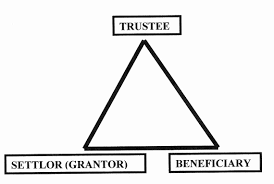
How To Eliminate The Hassles Of: *PROBATE *LAWYERS *DELAYS *LEGAL SYSTEM
Bonus Book - Dream Vacations You Can Afford Taking a Luxury Vacation on a Shoestring Budget: Getting a last minute travel deal is one thing that you can procrastinate on.
This is a great way to save on travel if you are on a budget.
If you can go away upon at the last minute, then you can save plenty of money for your trip. In fact, you will be able to save up to three-fourths of what the trip would normally cost.
This is definitely a steal and in this book we show you exactly what you should be looking out for in order to take that luxury vacation on a shoestring budget.
Financial Literacy - 4
Product Details
Protect Yourself From Identity Theft
Identity theft is a serious crime, one that is occurring with an alarming frequency.The statistics are mind boggling and the damage that can be cause is endless. The criminals who perpetrate the crime of identity theft are sly and cunning.
Before you can even know it, you're credit is ruined and you must "jump through hoops", just to get it repaired a small bit.
In this book we show you what to look out for and how to avoid the nightmare of identity theft.
Understanding the basic concepts of debt
Budgeting is an important aspect of living and a person who knows how to budget will go a long way in this commercialized society.The problem sets in when a person fails to make an efficient financial plan and his expenses exceed his earnings. When this happens, a person has no choice but to borrow money to make up for his financial deficiencies.
Borrowing once or twice because of a mismanaged financial plan is normal but when borrowing becomes a regular thing that can put a person in serious debt problems.
In this book we deal with understanding the basic concepts of debt so that you can better manage your finances and keep out, or even get out of the debt trap.
Financial Literacy - 5
Product Details
Flipping a House, Is it Right for You? 
Of all the reality TV shows that have come and gone since the fad started, very few have caused people to sit up and say, "hey, I can do that, and I can make a million!"Like the house-flipping shows that seem to be everywhere on cable these days.
But is what you see on TV accurate? Can the process really be that easy? Let's take a closer look.
Becoming The Richest Man in Post Modern Babylon 
Are you struggling with the fact that you really don't know anything about becoming wealthy? If you continue much longer on your present path, not only will you never achieve financial freedom, but financial ruin lies ahead. Many people are dangerously close to financial disaster! What about your retirement? Do you dream of financial freedom for your golden years? This book will plant the daily thought necessary for your success.
Investing For Impact 
This product offering will provide you with the basic principles of investing.We will define: What is a Stock? What is a Bond? What is a Mutual Fund? What is and Electronic Traded Fund (EFT)? What is and Option?
Then we will discuss the markets and provide the inner workings of the New York Stock Exchange (NYSE), the NASDAQ, Commodity Futures Trading Commission (CFTC) which is the market that trades futures contracts on Oil, Sugar, Wheat, Orange Juice, etc.
This is also the market where stock options are traded for the largest publicly traded companies in the world.
Lastly, we will help you to understand the different asset classes for long term investing along with ""how do retirement accounts work and what is the best way to increase my returns and reduce my taxes""?
Financial Literacy - 6
Product Details
Investment Principles 
Diversification and Allocation - for many investment managers this is the most important of the investment concepts.We will educate you on how a well-rounded portfolio can take some market fluctuations without being negatively affected. The concept of Asset Correlation will be described as a hedge strategy to protect your portfolio.
Then we will provide examples of allocation models for a Conservative, Moderate, and Aggressive portfolio based on an individual investor personality/profile for risk. We will show you how to allocate your investments in Large Capitalization Stocks, Small Capitalization Stocks, International Stocks, Fixed Income, and Real Estate.
We will also address the fear factor that comes with investing and provide specific information about how and when to enter/exit markets. We outline the cyclical nature of different asset classes and that is important to understand that when markets are moving down this is not a time to panic....simply work to find good opportunities and be ready to strike.
Time Value Of Money 
The core idea of the Finance material is to help you understand the importance of the world of finance in daily life.An international theme will help you understand how trade is financed, how infrastructure brings about better living conditions in emerging countries and improves the standard of living for workers. The concept of ""Time Value Of Money"" will be described and how financial institutions calculate risk into the rates they charge borrowers.
This is especially important when applying for credit as an individual or a small business owner. Personal Finance is all around us when we use a credit card, finance a car, buy a house, or invest in our retirement.
4 Corners Alliance Group will help to ensure that you understand the basic financial concepts that can help you save, invest, and become financially independent.
Real Estate Investment Trust (REIT) 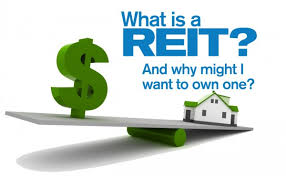
In today's volatile markets we have seen stocks, bonds, and real estate fluctuate wildly as economies became unsettled with the housing market.The fact that mortgage lenders were aggressively providing buyers an opportunity for their dream home, and home builders were putting up large beautiful homes at a record pace, could only mean that a housing bubble was on the horizon. Where there is fear there is opportunity.
4 Corners Alliance Group has partnered with an International Investment Firm who is offering us the ability to invest with them in under-valued properties that will provide huge gains and a strong steady revenue stream.
Investing in real estate is a long term commitment but has a short and long term benefits...quarterly income and capital gains. This alliance will allow you to invest in Corporate Office Buildings, Medical Office Buildings, Retirement Facilities and other long term real estate.
Our partner has experience in finding under-valued properties that can be purchased at a discount to the market price and provide an income stream that is significantly better than traditional fixed income instruments.
We show you how to have the opportunity to invest as the wealthy have for centuries: take advantage when markets are down. Real Estate is an ""out of favor"" asset class that will ultimately become a ""darling"" again.
Insider's Guide To Buying Gold & Silver 
In this final part of the education series, we reveal to you the discoveries we have made about this whole complicated and confusing issue of investing in gold and silver. We will show you the good, the bad and the ugly...and show you what we ultimately discovered.... and reveal to you how much of the ""smart money"" is investing right now.
Platinum Monthly Newsletter 
Product Details
The monthly newsletter covers global financial current affairs topics as well as the occasional international lifestyle article.
This newsletter is delivered the first week of each month.
As you can see in the 4 Corners Alliance Group, there are tons of informative information given in these educational books. Education is the key to success, you need to know how to generate wealth and how to keep it for wise expenditures.
Another benefit is sharing this opportunity with others and creating an extra income stream on top of what you earn currently. This opportunity has a one-time start up of $18, you will need to refer 4 of your friends, family, business networks or anyone who wants to learn and earn in a soft economy.
The compensation plan is a 4x6 forced matrix which requires you to only have 4 people on your front line and going down 6 levels. The word forced matrix is used in compensation plans where reps are placed under by date of entry.
For ex: The 4 Corners Alliance Group there are 4 people and whoever comes in after the 4th person goes under the first person who joined and so on

When participating in the 4 Corners Alliance Group opportunity you must own all of the products to receive any commissions on them, these purchases will be taken out of your profits from the company.
The goal is to buy the products out of profits and not pockets.
What if you can't recruit people to join your opportunity?
This newsletter is delivered the first week of each month.
As you can see in the 4 Corners Alliance Group, there are tons of informative information given in these educational books. Education is the key to success, you need to know how to generate wealth and how to keep it for wise expenditures.
Another benefit is sharing this opportunity with others and creating an extra income stream on top of what you earn currently. This opportunity has a one-time start up of $18, you will need to refer 4 of your friends, family, business networks or anyone who wants to learn and earn in a soft economy.
The compensation plan is a 4x6 forced matrix which requires you to only have 4 people on your front line and going down 6 levels. The word forced matrix is used in compensation plans where reps are placed under by date of entry.
For ex: The 4 Corners Alliance Group there are 4 people and whoever comes in after the 4th person goes under the first person who joined and so on
- Level 1 has 4 reps
- Level 2 has 16 reps that go under the first 4 reps in order by day of entry
When participating in the 4 Corners Alliance Group opportunity you must own all of the products to receive any commissions on them, these purchases will be taken out of your profits from the company.
The goal is to buy the products out of profits and not pockets.
What if you can't recruit people to join your opportunity?
I guess the best way to do that is to learn how to recruit people into your organization, get FREE training here LEARN HOW TO SPONSOR ENDLESS AMOUNTS OF REPS
If you found this post to be helpful please comment and share.
Home Business – Learn the Benefits
They say that we are throwing away $20.00 a day if we do not own a Home Business. When you think about this, the money we are throwing away is taxes that we pay to the IRS.
The government gives entrepreneurs and corporations tax advantages, these tax advantages are given to us because we stimulate the economy. Owning a home business has its advantages and disadvantages, but there are more advantages than disadvantages.
BENEFITS OF BEING A BUSINESS OWNER
- Create unlimited amount of income
- Free up more time with family
- Retire from your profession earlier than 65
- Reduce taxes
- Increase tax refund
- Be your own boss
- Work when you want
- Reduce stress
If you don’t own a home business then you should one day soon, don’t miss out on these wonderful benefits. Home based businesses are on a rise in 2014 and that number will soon double in the next few weeks.
When choosing a home based business, you want to fully research to make an informed decision. Look at what the company offers to the customer, can you benefit from these products? If you can then this would be a good company to represent.
If you value your time like most of us, then you would definitely love owning a home business. Just knowing that your hard work never gets unnoticed or undervalued.
Subscribe to:
Posts (Atom)